
Short answer. A machine breaks down again and again when each repair removes the symptom but nobody records or removes the cause. The way out is a short routine: write every failure down in the same form, ask "why" until you reach something you can change, change the standard job or the part, and watch a signal that will show the problem earlier next time. It needs no new software to start, only discipline and one table.
If your maintenance team spends the week fixing the same pump, press or conveyor, you are not alone, and it is rarely the technician's fault. Repeat failures are what a plant gets when repairs are fast but learning is slow.
Why the same machine keeps failing
- The symptom was repaired, not the cause. The seal was replaced, but the shaft that wears it out was not checked.
- Nobody wrote it down in a form others can use. "Pump P-14, leaking, replaced" tells the next shift nothing: which seal, how long it lasted, what the load was.
- The wrong part or an unverified analog. A part that fits but has a different rating fails earlier. (Reading the manual and the part number correctly is its own topic: see servicing foreign equipment and reading documentation.)
- The conditions changed. A higher load, a new product, dirt, heat or a changed shift pattern, and the old interval no longer fits.
- The standard job is wrong. The checklist does not include the one step that would have caught it: a torque, an alignment, a filter.
- The warning came too late. The signal was there for days (temperature, vibration, current), but nobody was looking at it. (More in vibration, temperature, current.)
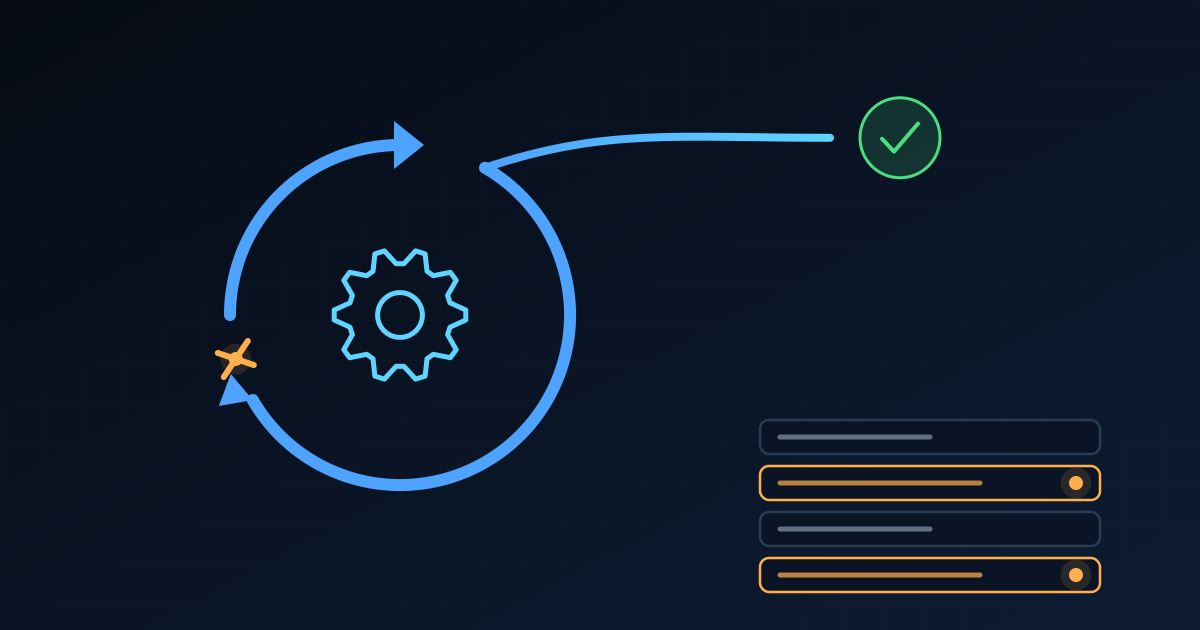
A five-step routine that works without new software
- Log every stop in one form. Machine, date and time, what stopped, what was done, which part, how many minutes, who did it. Ten fields are enough; a spreadsheet is fine.
- Mark repeats. The same machine, the same part or the same code twice in 90 days is a repeat. Review the repeats weekly, not only the worst stop.
- Ask "why" until you can act. Not "the bearing failed", but "why did it fail early": contamination, misalignment, lubrication, load, a bad batch. Stop when the answer is something you can change.
- Change something durable. The checklist, the interval, the part or its supplier, the operating limit, the stock level. A repair that changes nothing will repeat.
- Pick one signal to watch. The cheapest reading that would have shown this fault earlier, with a limit that creates a work order.
| Step | What you write down | Result |
|---|---|---|
| Log | machine, part, minutes, cause (as known) | a history others can read |
| Mark repeats | the pair "machine + part/code" seen twice | a short list of real problems |
| Why | the chain of causes down to a changeable one | a decision, not a guess |
| Change | the new interval, part, checklist | the repeat is removed |
| Watch | the signal and its limit | an earlier warning |
Which failures to attack first
Do not start with the most dramatic stop. Start with the ones that are frequent, expensive in stop time, or wait long for a part. Multiply how often it happens by the minutes it costs and by the cost of a minute of your line (see how to work out what an unplanned stop really costs). Three machines are enough for a first month.
Where a digital twin helps, and where it does not
A platform like ours can keep the failure log, show the history of one machine next to its sensor readings, raise a warning from a signal and turn it into a work order and a part order. It does not replace the routine above: if nobody decides what to change, the same failure will come back with better graphs. The routine comes first; the tool makes it faster and less dependent on one person's memory.
Questions people ask
Why does the same equipment keep breaking down? Usually because the cause was never recorded or removed: the repair fixed the symptom, the part was an unverified analog, the conditions changed, or the checklist misses a step.
How do you find the root cause of a repeat failure? Log each stop in one form, mark repeats, and ask "why" until the answer is something you can change (a part, an interval, a limit, a step in the checklist).
Is reactive maintenance always bad? No. Run-to-failure is sensible for cheap, non-critical parts with a spare on the shelf. It is a problem for critical machines, long lead times and parts that stop the whole line.
How long until repeat failures fall? With a weekly review of repeats on three to five machines, a plant usually sees the first removed repeats within a few weeks. The size of the effect depends on the plant; we do not promise numbers.
How to start this week
Pick the three machines with the most stops. For each, list the last five failures from memory and logs. Mark the repeats, ask "why" for each, and write down one change. That is a day of work and the first version of your failure history.
If you would like to try this with data from your own machines, you can request a pilot: five to seven weeks on three to five critical machines, with success criteria agreed before we start.