
When a machine stops, the repair itself is often the shorter part of the job. The longer part is finding out what it is telling you: which fault this code means, what to check first, which part is meant, what the limit is. With imported equipment, all of that sits in a manual written for someone else, in another language, sometimes for another model. A wrong reading does not just waste time. It sends a technician to replace a healthy part, or past a safety step.
What service knowledge is
It is the small set of facts a technician needs from the documents, each one with its source:
- Fault and alarm codes: meaning, likely causes, what to do.
- Procedures and intervals: what is done, how often, in which steps.
- Parts: numbers, what they fit, accepted alternatives.
- Limits and settings: temperatures, pressures, currents, torques, with units.
- Notes from the plant itself: what actually fixed it on this machine.
A thick manual is not knowledge. The few dozen facts in it that you actually use are.
Six places where reading goes wrong
1. The same code, a different meaning. Code tables differ between models and firmware versions, and one manual often has separate tables for alarms, warnings and faults. A code copied from the wrong table is a confident wrong answer. Write codes exactly as the machine shows them, and note which table and which version the meaning came from.
2. Units and standards. Limits appear in bar, kgf/cm², psi or MPa; cross-sections in mm² or AWG; a "rated" value is not a "maximum" value. National standards (for example Chinese GB or JB) are not automatically equal to an IEC or ISO standard that looks similar. Convert units by explicit rule and show both values. Do not assume two standards are equivalent unless a source says so.
3. Words changed by translation. Machine translation happily swaps fault, alarm and warning, or reset and restart, and these are not the same action. Keep the original wording next to the translation and use one agreed term for each concept in your plant.
4. Part numbers and "analogs". A part number misread by one character (0 and O, 1 and I) orders the wrong part. A listed analog may differ in tolerance, rating or connector. An alternative is a recommendation to check, not a guarantee, so check it against the drawing.
5. The wrong version. A manual for the previous model, or for another firmware range, looks identical and is not. Every fact should say which models and versions it applies to, and a machine outside that range should get a warning, not an answer.
6. Handwritten notes and local fixes. Margin notes, marked-up printouts and the foreman's memory are often the most valuable knowledge in the plant. They must be read verbatim, kept apart from the vendor's text, and tied to the one machine they concern, not generalised to every machine of the same model.
Not every mistake costs the same
Misreading the colour of an indicator and misreading a lockout procedure are different mistakes. Sort answers by the consequence of an error: those that touch electrical isolation, pressure, moving parts or hot surfaces deserve more checks than the rest. A sensible rule is a second person for every answer in the dangerous classes, and a single reviewer for the rest.
A checklist for reading service documents
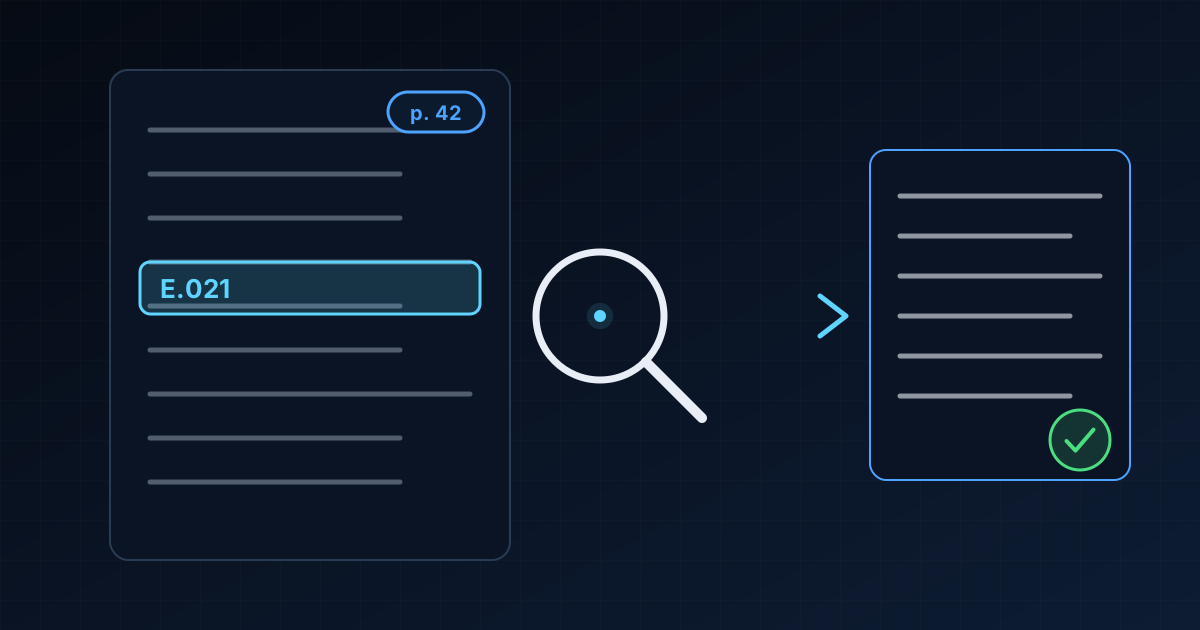
- Every answer carries its source page, and the original quote is one click away.
- Original wording is kept beside the translation.
- The model and firmware range is checked before the answer is used.
- Units are converted by rule, and both values are shown.
- Anything uncertain is marked as uncertain, not smoothed over.
- Dangerous answers are approved by two people.
- Knowledge specific to one machine stays attached to that machine.
- What actually worked is written into the machine's history, so the next reading starts from it.
How we approach this
This is how the service knowledge part of our platform is built. You send the manuals, drawings and nameplates; the system extracts codes, procedures, parts and limits; every answer shows the page it comes from; a person verifies what is extracted; dangerous classes can require a second approver; units are converted by rule; and equivalents of national standards are not guessed. It is not a replacement for a qualified technician. It is a way to give them a checked starting point in their own language.
Where to start
Take one machine and its ten most frequent fault codes. Read each one against the manual with a colleague, note the page, the model range and the units, and write down what actually fixed it. In an afternoon you will see how much of the "obvious" was a guess, and you will have your first set of checked answers.