
Short answer. Preventive maintenance acts on a calendar or on running hours. Predictive maintenance acts when a measured signal shows that wear is under way. Use run-to-failure for cheap, safe, non-critical parts; preventive maintenance where wear follows hours or cycles; condition-based or predictive maintenance where a signal changes before the failure and a stop is expensive. Most plants need a mix, and the choice is made machine by machine, not for the whole plant at once.
Many teams argue about "preventive or predictive" as if one had to win. In a real plant both are tools, and so is letting a cheap part run until it fails. The useful question is not which strategy is better, but which one fits this machine.
The four strategies in plain words
- Reactive (run to failure). You repair after it breaks. Sensible for cheap parts that are safe to lose and have a spare on the shelf.
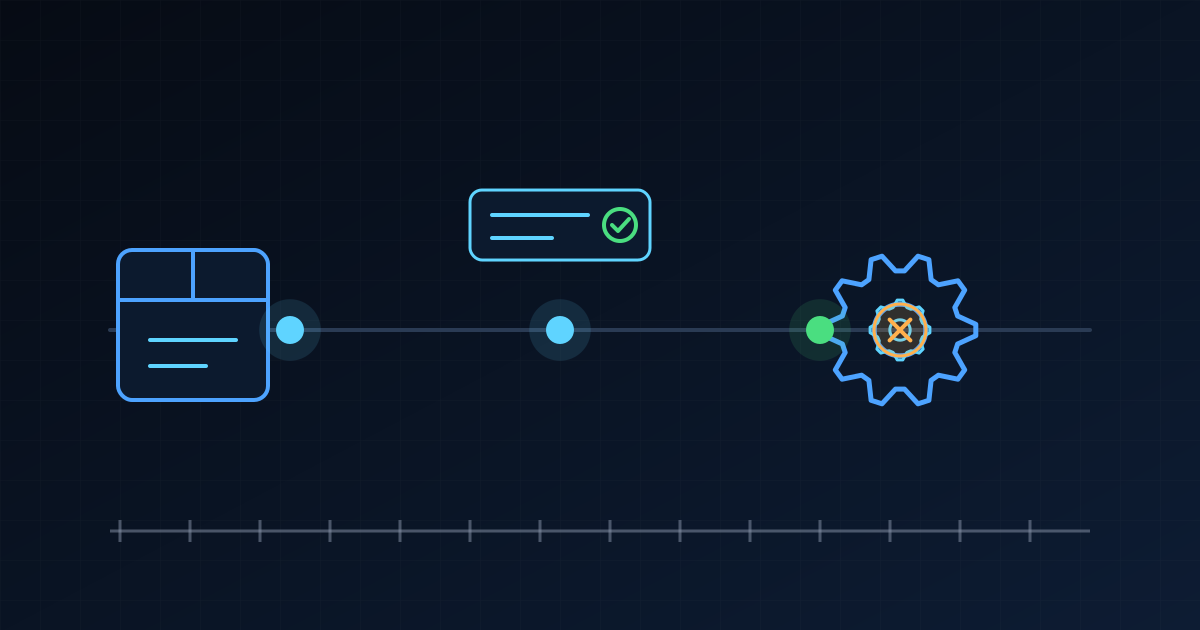
- Preventive (time or usage based). You service or replace on a schedule: every 500 hours, every 6 months, every 100,000 cycles. Simple to plan and to audit.
- Condition-based. You act when a measured value crosses a limit: a bearing temperature, a vibration level, a motor current.
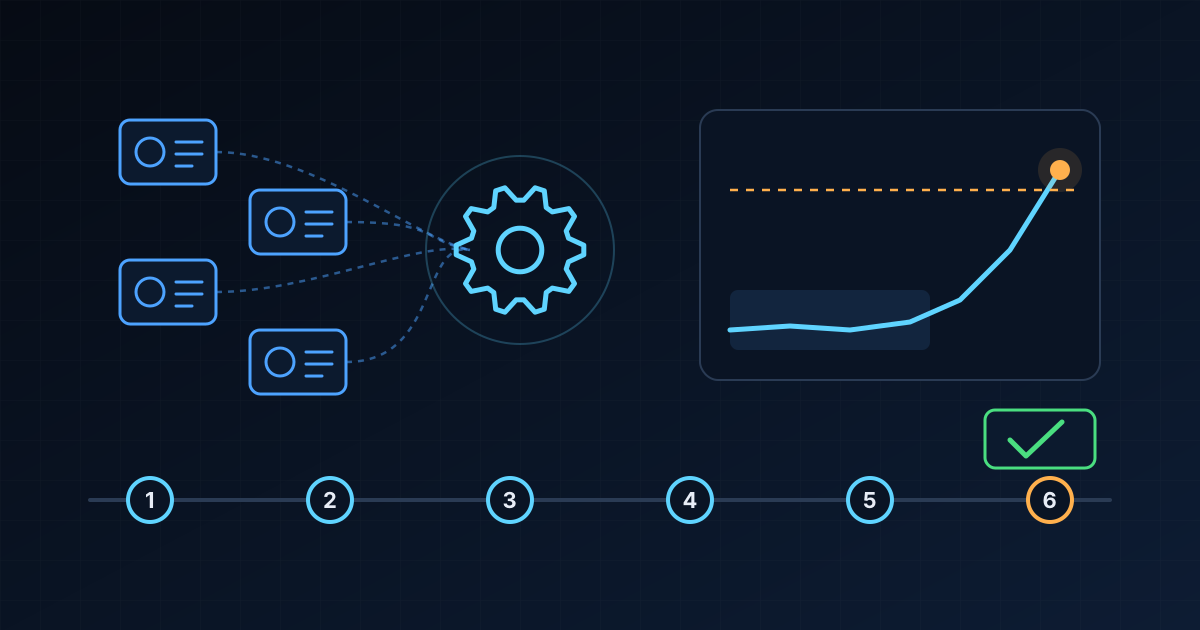
- Predictive. You go one step further: from the trend of the measurements you estimate how long the machine can still run and plan the work, and the part, for the right moment.
| Strategy | You act when | Works best for | Main cost | Main risk |
|---|---|---|---|---|
| Reactive | it has failed | cheap, non-critical, spare in stock | unplanned stops | a critical part fails at the worst time |
| Preventive | the calendar or hours say so | wear that follows hours or cycles | parts and labour replaced early | work done too early, or not early enough |
| Condition-based | a value crosses a limit | machines with a clear signal | sensors, limits, someone who acts | alarms nobody owns |
| Predictive | the trend says time is running out | critical machines, long part lead times | data, models, discipline | trust in a forecast nobody checks |
Why "preventive only" still breaks down
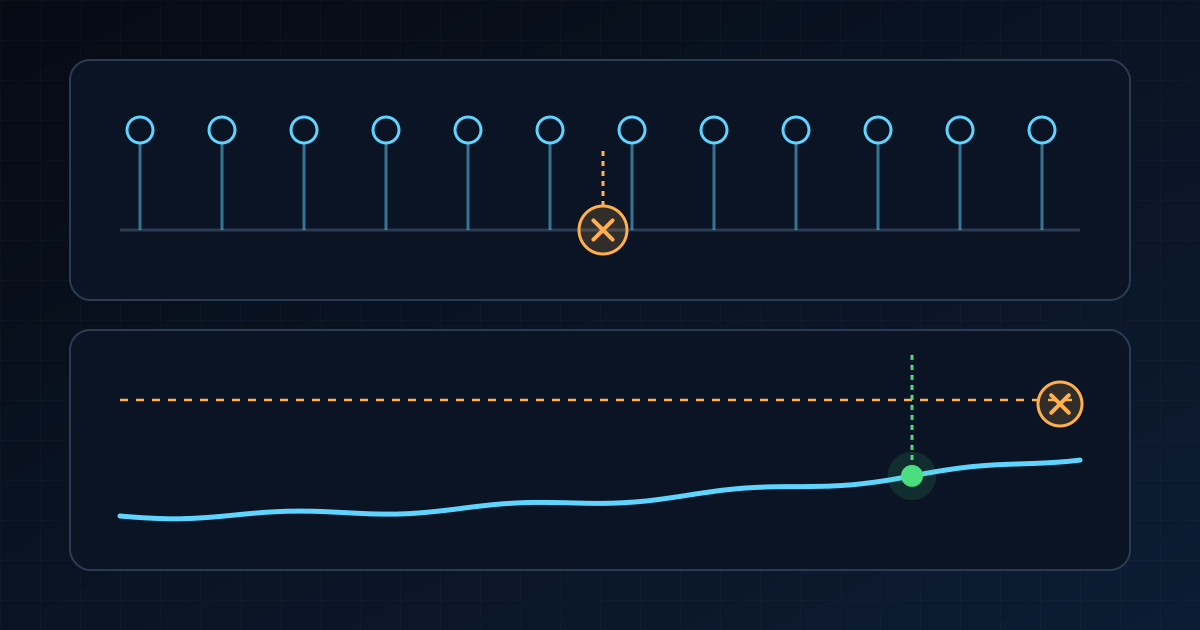
A calendar treats a machine that runs lightly and one that runs hard the same way. Many failures do not follow the calendar: they follow load, dirt, heat, a bad batch of parts or a changed product. So a plant that does only preventive work usually has two problems at once: parts replaced while still good, and failures that arrive between two services. Opening a machine can also introduce faults of its own: a wrong torque, a contaminated bearing, a missed step.
Choosing for each machine: three questions
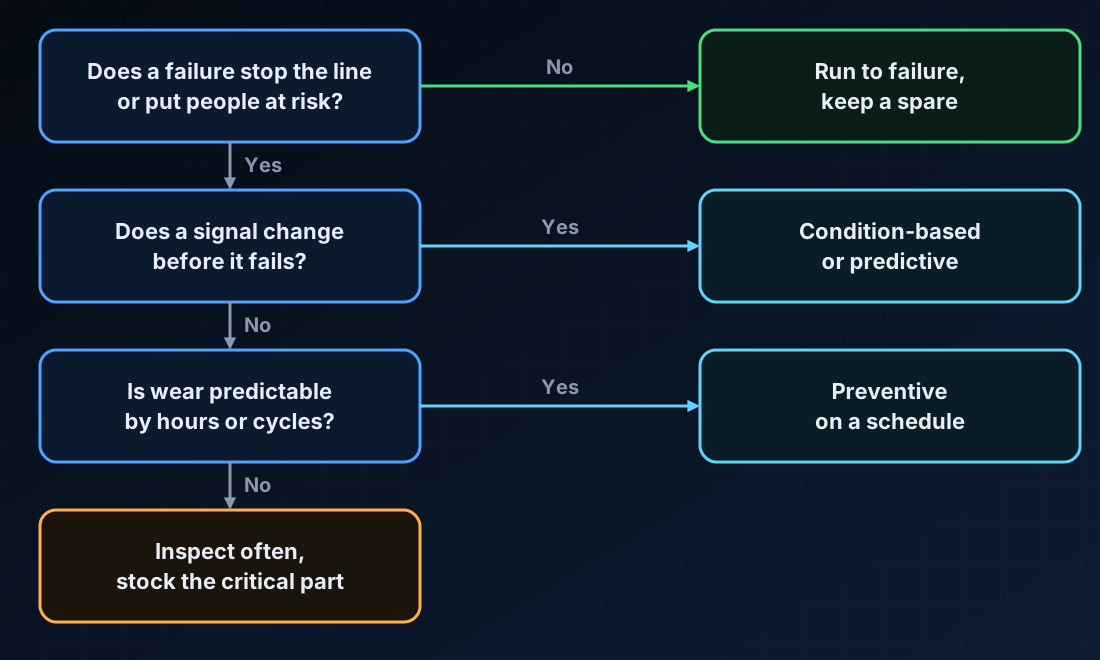
- Does a failure stop the line or put people at risk? If not, and the part is cheap, run it to failure and keep a spare. Do not spend effort here.
- Does a signal change before it fails? Temperature, vibration, current, pressure, noise: if something measurable moves for days or weeks before the failure, use condition-based or predictive maintenance. This is where it pays back most. (More in vibration, temperature, current.)
- Is wear predictable by hours or cycles? Filters, belts, some seals and lubricants wear at a known rate: use preventive maintenance by hours or cycles, not by the calendar.
If the answer to all three is no and the machine is critical, inspect it often, keep the critical part in stock and look for a cheap signal to start measuring.
What predictive maintenance needs to work
- A measurable signal that really changes before the failure, not a sensor chosen because it was easy to install.
- A history of failures and repairs to compare with (see the same machine broke down again).
- Someone who acts: a warning that does not become a work order is only a chart.
- Parts planning: a warning two weeks ahead is wasted if the part takes six weeks to arrive (see spare parts and lead time).
Common mistakes
- Sensors everywhere, decisions nowhere. Start with three to five machines where a stop is expensive.
- Alarms without an owner. Every limit needs a person and an action.
- Switching everything to predictive at once. Run it on a few machines, compare with what really happened, then extend. (A plan for the first weeks is in predictive maintenance in a small plant.)
- Ignoring the cost side. Compare the cost of a stop (see what an unplanned stop really costs) with the cost of measuring and acting.
Questions people ask
What is the difference between preventive and predictive maintenance? Preventive maintenance is done on a schedule (hours, cycles, calendar), whether the machine needs it or not. Predictive maintenance is done when measurements show that the machine is wearing and estimate how long it can still run.
Is predictive maintenance always better than preventive? No. It pays back where a stop is expensive and a signal changes before the failure. For cheap parts or wear that follows a known schedule, preventive or run-to-failure is cheaper and simpler.
What is condition-based maintenance? Work done when a measured value (temperature, vibration, current) crosses a defined limit. It is the simplest form of using data and often the first step toward predictive maintenance.
How many machines should we start with? Three to five where an unplanned stop is costly or a part takes long to arrive, with success criteria agreed in writing before you start.
How to decide this month
List your ten most critical machines. For each, answer the three questions above and write the strategy next to it. For the machines where the answer is "a signal changes before it fails", pick the cheapest signal to start measuring and write down who acts on a warning. That is a day of work and the start of a maintenance plan that matches your machines.
If you would like to test this on three to five of your own machines, you can request a pilot: five to seven weeks, with success criteria agreed before we start.